Lava Lamp Restoration Checklist
How to Use This Checklist
Work through each section in order. Do not skip ahead to fluid replacement or resealing before completing the diagnostic steps — problems compounded by out-of-sequence work are harder to reverse. Each item is written as a discrete action. Check it off when it is fully complete, not when it is in progress.
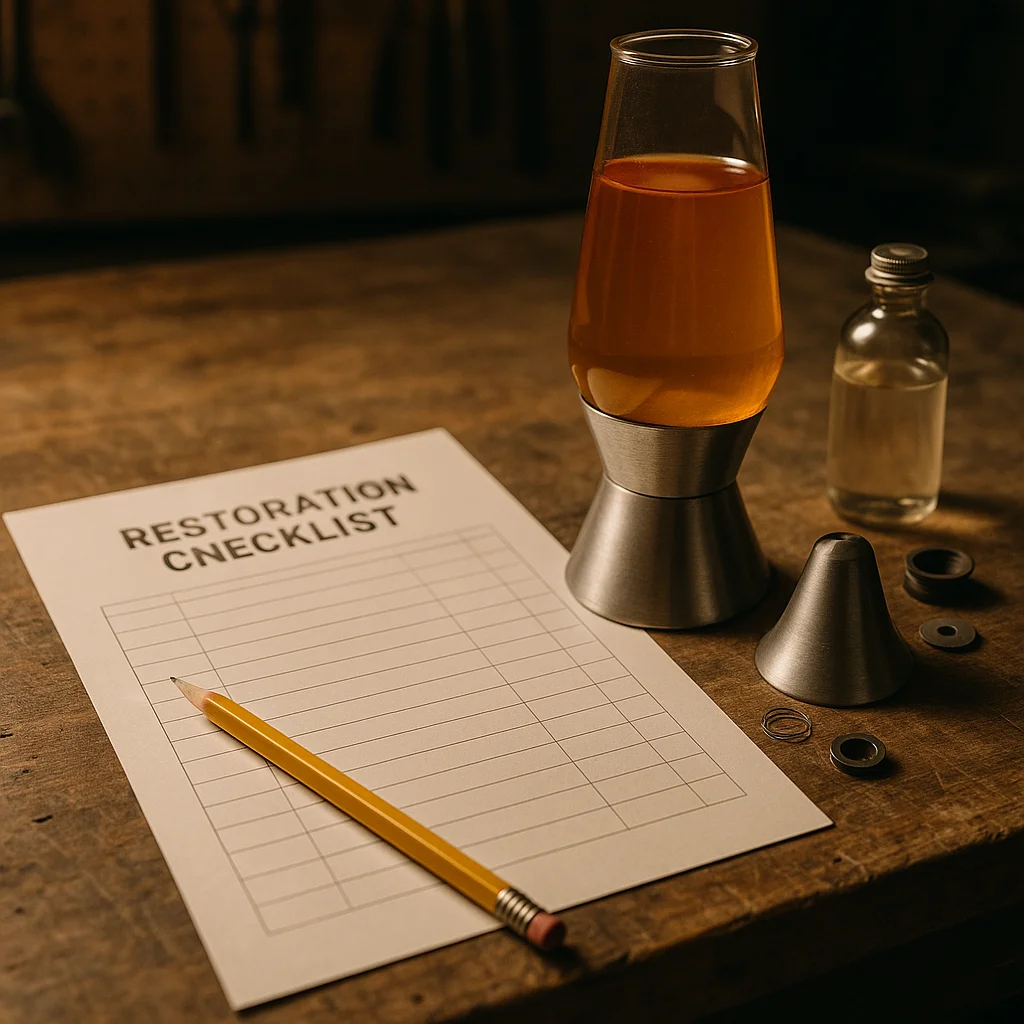
A printed copy kept beside your workstation is more reliable than scrolling through a screen mid-procedure. Print this page or copy the items into a notebook before you begin.
Stage 1 — Initial Diagnosis
Before touching the lamp, observe and record its current condition. This stage corresponds to the procedures in Diagnosing Common Lava Lamp Problems.
- Confirm the lamp powers on and the bulb illuminates.
- Note the wax condition at room temperature — is it settled flat, fragmented, or fused to the globe wall?
- Run the lamp for 90 minutes. Record the wax behaviour at operating temperature.
- Check for cloudiness in the fluid — milky white, yellowed, or fully opaque are distinct conditions requiring different responses.
- Inspect the cap and base seal for corrosion, cracking, or previous repair attempts.
- Photograph the lamp from three angles before any disassembly. These reference images matter later.
Do not proceed to Stage 2 until all six items are recorded.
Stage 2 — Disassembly and Component Assessment
This stage covers physical handling of the globe and cap. Refer to Resealing Lava Lamp Caps and Globes for cap-specific guidance if resistance is encountered.
- Allow the lamp to cool fully to room temperature — at least two hours after last use.
- Place the globe on a non-slip surface. Do not grip the glass by the neck.
- Remove the cap. Set it aside. Do not force it if it resists; apply a damp cloth for grip and try again.
- Carefully pour the existing fluid into a clean, labelled container. Retain it for comparison and testing.
- Examine the wax compound (the coloured waxy mass) — note whether it is intact, split, or contaminated with foreign matter.
- Inspect the inside of the globe for residue lines, etching, or deposits on the glass surface.
- Assess the cap for thread integrity, rubber gasket condition, and metal corrosion.
Stage 3 — Fluid and Wax Restoration
This is the most chemically involved stage. Review the Lava Lamp Fluid Chemistry Reference and the guides on Restoring and Replacing Lava Lamp Fluid and Replacing and Sourcing Lava Lamp Wax Compounds before proceeding.
- Test the retained fluid for density using a hydrometer (an instrument that measures the specific gravity of a liquid). Record the reading.
- Determine whether the fluid requires adjustment, full replacement, or disposal.
- If replacing fluid, prepare the correct distilled water and surfactant solution — proportions vary by globe volume.
- If the wax compound is intact, clean it gently with distilled water only. Do not use solvents.
- If the wax compound is damaged or contaminated, proceed to full wax replacement using the wax sourcing guide.
- Reintroduce the wax into the globe. Add the prepared fluid slowly.
- Run a 30-minute test without the cap to observe wax behaviour before sealing.
Stage 4 — Resealing and Final Testing
- Confirm fluid level — it should sit approximately 10–15 mm below the cap thread base.
- Inspect the gasket. Replace it if compressed, cracked, or deformed.
- Seat the cap by hand and tighten to firm resistance. Do not over-torque.
- Run the lamp for a full two-hour cycle. Observe and record wax behaviour.
- Check the cap seal for leaks at the 30-minute and 90-minute marks.
- Compare against your Stage 1 photographs to confirm improvement.
This checklist covers the complete restoration sequence in verified order. For any stage where a step is unclear or produces an unexpected result, the detailed procedural guides — beginning with the Beginner’s Guide to Lava Lamp Restoration — cover each action in full. The Frequently Asked Questions page addresses the most common points of uncertainty encountered mid-restoration.