Beginner's Guide to Lava Lamp Restoration
What You Need Before You Start
Restoration begins before you touch the lamp. Gather everything first. Working with an incomplete set of tools is the most common cause of mid-procedure mistakes.
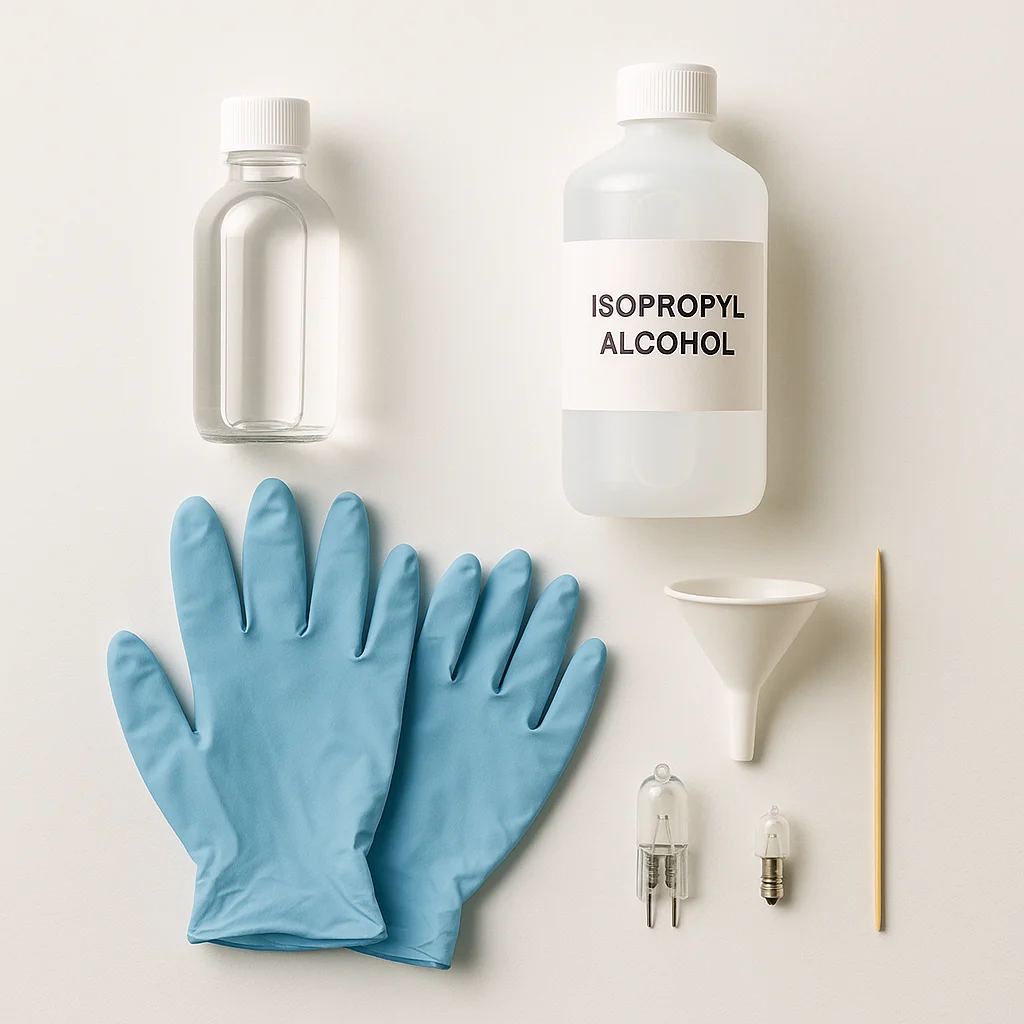
You will need the following:
- A soft cloth and a clean, flat work surface
- Distilled water (tap water introduces minerals that cloud the fluid)
- Isopropyl alcohol at 90% concentration or higher
- A pair of latex or nitrile gloves
- A small funnel
- A non-metallic probe — a wooden skewer works well — for testing wax consistency
- Paper towels for spills
- A replacement bulb matched to your lamp’s wattage rating
Do not use dish soap, tap water, or any solvent not listed here unless a specific guide on this site directs you to. Substitutions cause chemical imbalances in the fluid that are difficult to correct.
Understanding How a Lava Lamp Works
Before diagnosing or repairing anything, understand the mechanism. A lava lamp operates on a narrow density relationship between two substances: the wax compound and the surrounding fluid. At rest and at room temperature, the wax is slightly denser than the fluid and sits at the bottom. When the bulb heats the base, the wax expands, becomes less dense than the fluid, and rises. It cools near the top, contracts, and sinks again. This cycle produces the movement.
The fluid is typically a water-based solution with surfactants — compounds that reduce surface tension — and sometimes a small amount of salt or other solutes to fine-tune fluid density. The wax is usually a paraffin blend. The balance between these two densities is precise. A difference of less than 1% in specific gravity separates a lamp that flows well from one that does not move at all.
This matters for restoration because most common faults — cloudy fluid, wax stuck at the top, wax that won’t rise — trace back to a disruption of this density relationship. See the Diagnosing Common Lava Lamp Problems page for a full symptom breakdown.
The Restoration Sequence
Follow these stages in order. Skipping ahead causes compounding problems.
- Inspect the globe cold. Look for cloudiness, separation in the wax, or discolouration in the fluid. Record what you observe.
- Run the lamp for one full cycle. Switch it on and leave it for two to four hours. Observe the wax behaviour once it is fully warmed.
- Switch it off and allow it to cool completely. This takes at least one hour. Do not open a warm globe.
- Remove the cap. Most caps twist counter-clockwise. Some are crimped and require more careful handling — see the Resealing Lava Lamp Caps and Globes guide before proceeding if yours is crimped.
- Assess the fluid. Smell it. Cloudy fluid with no odour often indicates surfactant breakdown. A chemical or sour smell suggests contamination.
- Address the wax or fluid as indicated. The Replacing and Sourcing Lava Lamp Wax Compounds and Restoring and Replacing Lava Lamp Fluid guides cover each route in detail.
- Reseal and test. Replace the cap, run a full heat cycle, and verify flow behaviour.
Safety Points to Observe Throughout
The globe is glass. Handle it with both hands. Do not place it on uneven surfaces.
The fluid is not hazardous in small quantities, but avoid skin contact with concentrated surfactant solutions and do not pour used fluid into drains in large amounts — dispose of it according to local guidelines for liquid waste.
The bulb gets hot enough to cause burns. Always confirm the lamp is unplugged and fully cooled before internal work begins.
Once you are familiar with this sequence, the Lava Lamp Restoration Checklist provides a condensed reference for working through each stage systematically. For questions that fall outside this guide, the FAQ covers the most commonly encountered edge cases.