Diagnosing Common Lava Lamp Problems
Start Here: Read the Lamp Before You Open It
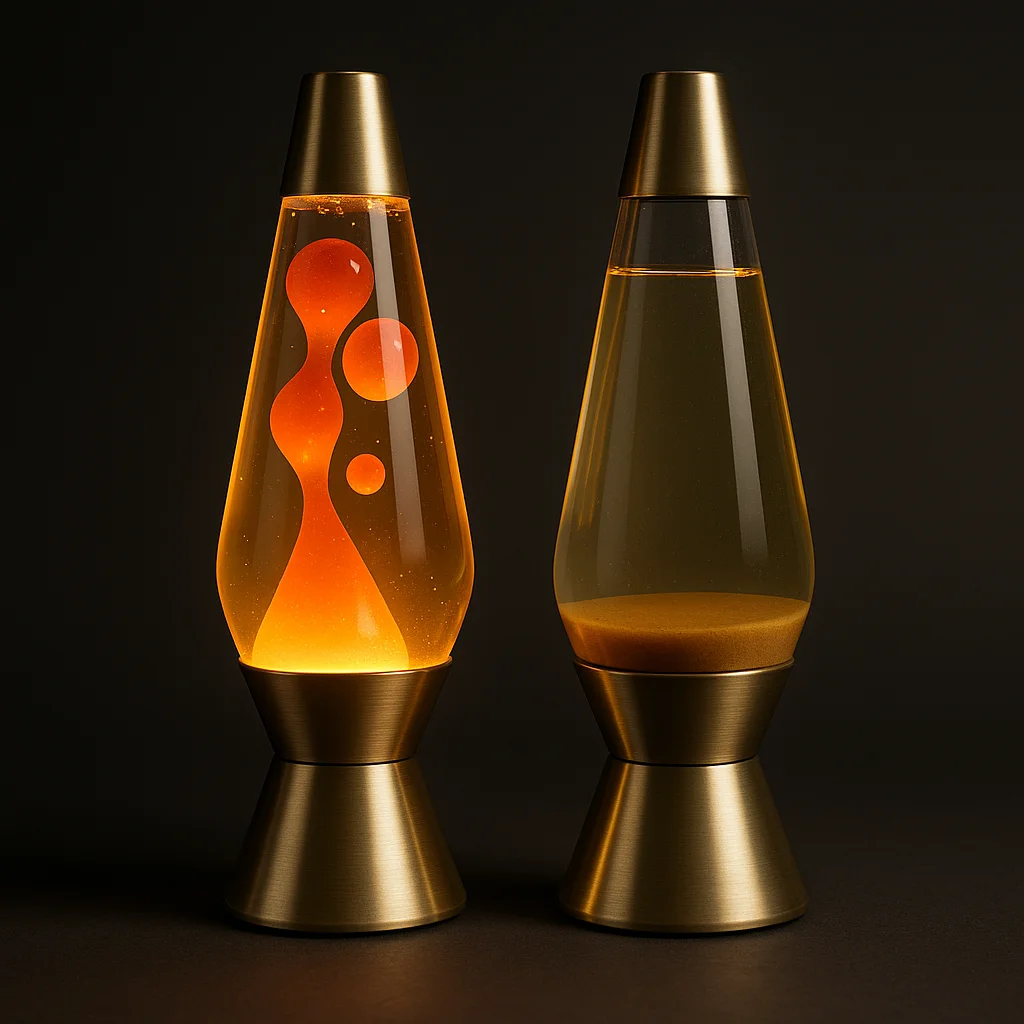
Diagnosis always precedes intervention. Before removing the cap or touching the fluid, run the lamp for a full 90 minutes at its rated wattage. Observe the wax behaviour at each stage: cold start, warm-up, and full operating temperature. Most faults become identifiable only once the wax is fully mobile — or conspicuously failing to become so.
Record what you see. The distinction between a wax that rises sluggishly and one that refuses to detach from the base at all points to different root causes and different remedies.
Common Fault Patterns and What They Indicate
The following faults cover the majority of cases encountered during restoration work. Each description includes a probable cause and a direction for further investigation.
Cloudy or milky fluid
The fluid has emulsified. This happens when water and the surfactant (the chemical agent that adjusts surface tension between fluid and wax) have mixed unevenly, often after overheating or repeated temperature shock. The cloudiness may be permanent. See Restoring and Replacing Lava Lamp Fluid for the full replacement procedure.
Wax pooled flat on the base and not rising
The wax density is too low relative to the fluid, or the lamp is under-powered. Confirm the bulb wattage matches the lamp’s specification. If wattage is correct and the wax still will not lift after 90 minutes, the fluid density has increased — typically through evaporation of lighter components — and needs adjustment or replacement.
Wax fused into a single dome that does not break apart
The wax has partially congealed and lost its working consistency. This is common in lamps stored for long periods or run at excessive temperatures. The wax compound may need to be removed and replaced. Refer to Replacing and Sourcing Lava Lamp Wax Compounds for compound options.
Comet tails — wax rising in long thin strings rather than blobs
The surface tension balance is off. The surfactant concentration is too low, or the surfactant has degraded. Small additions of surfactant to the fluid can correct this, but must be done incrementally. Full guidance is available in the Lava Lamp Fluid Chemistry Reference.
Wax clinging to the glass walls
A film of wax on the interior surface indicates the fluid is too cold during operation, or that the wax has partially oxidised. Check that the globe is not in a draughty location and that ambient room temperature is above 18 °C (64 °F) during use.
White or grey discolouration of wax
The wax has absorbed moisture or the colorant has separated. This is not always reversible by fluid adjustment alone. Inspect the cap seal for micro-cracks. See Resealing Lava Lamp Caps and Globes.
Using the Fault Patterns as a Flowchart
Work through the list systematically. A lamp may present more than one fault simultaneously — cloudy fluid and comet tails together, for instance — in which case address fluid condition first, since correcting density and surfactant balance often resolves secondary symptoms.
If the fault does not match any pattern above, or if the lamp shows electrical symptoms such as flickering or failure to heat, stop. Electrical faults fall outside fluid and wax restoration and require separate assessment of the bulb holder, wiring, and thermal fuse.
Once a fault has been identified, the appropriate restoration path becomes straightforward. The Lava Lamp Restoration Checklist provides a sequenced overview of the full process, and the Beginner’s Guide to Lava Lamp Restoration covers the tools and safety precautions needed before any hands-on work begins.