Restoring and Replacing Lava Lamp Fluid
When to Replace Lava Lamp Fluid
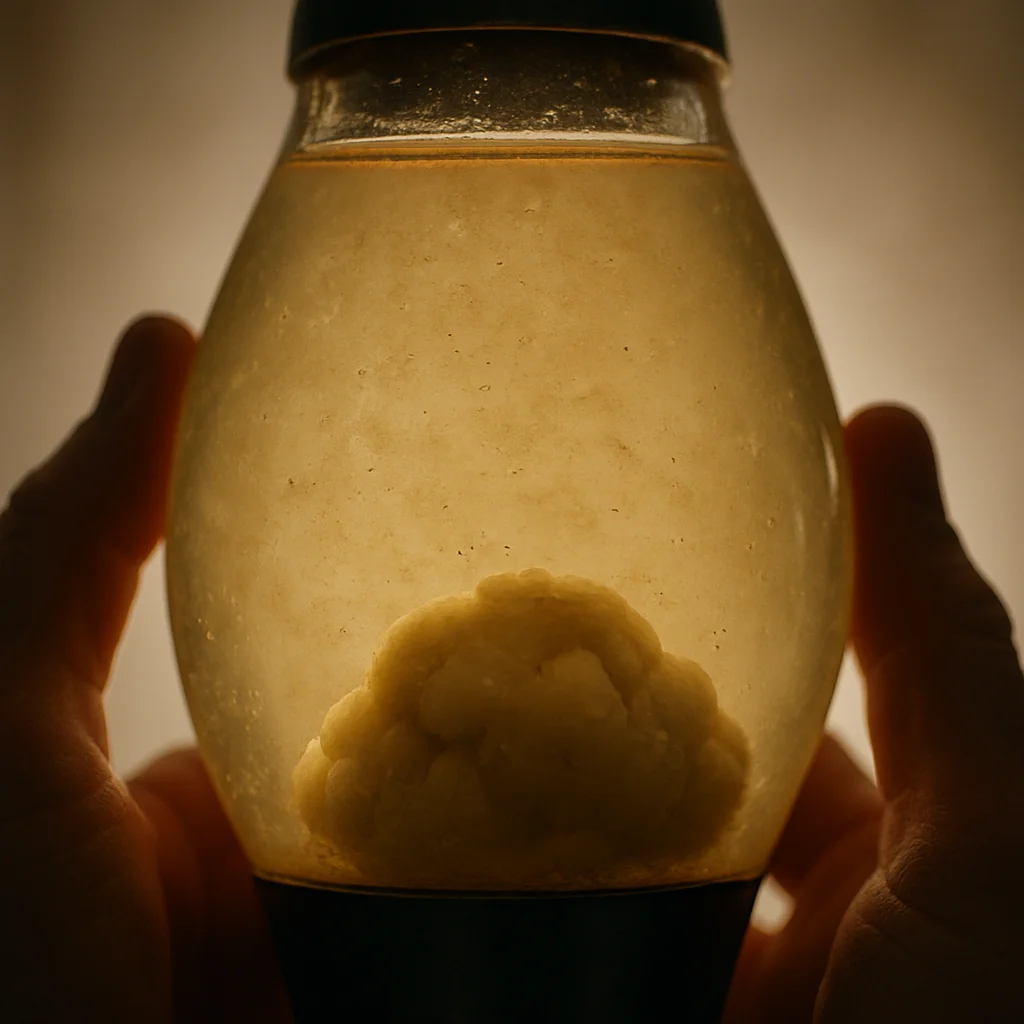
The fluid inside a lava lamp — a water-based solution, typically containing distilled water, a surfactant such as triethanolamide (TEA), and small amounts of salt or glycol to adjust density — degrades over time. UV exposure, heat cycling, and contamination from the wax compound all contribute to breakdown.
Replace the fluid when you observe any of the following:
- Permanent cloudiness that does not clear after 30 minutes of operation
- A yellowish or brown tint to the liquid
- Foam or surface scum that persists after cooling
- Wax that sits on the bottom and refuses to rise, despite a correctly functioning bulb
If you are uncertain whether the fluid or the wax compound is causing the problem, work through the diagnosis steps at Diagnosing Common Lava Lamp Problems before proceeding here.
Mixing Replacement Fluid
The core requirement is achieving the correct density — close enough to the wax compound that the wax sits just below neutral buoyancy at operating temperature, rising when warmed and sinking when cooled. The fluid must be fractionally less dense than the wax at rest.
What you need:
- Distilled water (tap water introduces minerals that cloud the solution)
- Surfactant — triethanolamide (TEA) is the community-standard choice, used in very small quantities (typically 1–4 drops per 500 ml)
- A density-adjusting agent: pickling salt (non-iodised) is the most accessible option; some restorers use propylene glycol for finer control
- A precision scale accurate to 0.1 g
- A hydrometer or a makeshift density test using a small wax sample
Basic procedure:
- Start with 500 ml of distilled water at room temperature.
- Add 1 drop of TEA. Stir gently. Avoid introducing bubbles.
- Dissolve a small amount of pickling salt — begin with 0.5 g — and stir until fully dissolved.
- Drop a small piece of the lamp’s wax compound into the solution. It should sink completely at room temperature.
- Add salt in 0.1 g increments, stirring after each addition, until the wax barely sinks — hovering just above the bottom with minimal agitation.
- Record the total salt quantity used. This figure is your baseline for this globe’s fluid volume and wax type.
At this stage, the fluid is mixed but not yet calibrated under heat. Fine-tuning happens after the lamp is reassembled and run.
Fine-Tuning Density After Reassembly
Once the globe is resealed — see Resealing Lava Lamp Caps and Globes for the full procedure — run the lamp for 45–60 minutes before assessing the flow.
If the wax rises but does not fall back:
The fluid is too dense. Remove a small volume of fluid and replace it with an equal volume of plain distilled water, then retest. Do this in 10 ml increments.
If the wax heats but does not rise:
The fluid is too light. Add salt solution in small amounts. If the globe is sealed, this requires reopening the cap.
If the wax rises and falls but remains cloudy:
The surfactant concentration may be too high. Drain and replace with fresh fluid, using fewer drops of TEA.
Allow 30 minutes of operating time between each adjustment before drawing conclusions. Fluid behaviour changes significantly as thermal equilibrium is reached.
Further Reference
Fluid restoration sits at the centre of most lava lamp repair work, and small errors in density balance account for the majority of failed restorations. The Lava Lamp Fluid Chemistry Reference provides a deeper breakdown of surfactant behaviour and density tables for common wax compounds. If you are also addressing deteriorated wax alongside the fluid, continue to Replacing and Sourcing Lava Lamp Wax Compounds.